

What Is a Verb
Introduction: What Is a Verb and Why It Matters
If you have ever asked, what is a verb, you are not alone. Verbs are one of the most important parts of English grammar. Without verbs, sentences cannot work. A verb tells us what someone or something is doing. It can also tell us what is happening or what exists.
When children learn to speak, verbs are often the first words they use. Words like run, eat, play, and sleep help them explain actions. As we grow, verbs help us share ideas, feelings, and stories. Every sentence you speak or write needs a verb to make sense.
This guide explains what is a verb in the simplest way possible. You will learn verb meanings, types, examples, verb phrases, and verb tense. Everything is written clearly, using easy words and real examples. Even a 5th-grade student can understand it without stress.
By the end, you will feel confident using verbs in speaking and writing. Let’s begin.
What Is a Verb? Simple Definition for Beginners
So, what is a verb? A verb is a word that shows action, state, or occurrence. In simple words, a verb tells us what someone does or what happens.
For example, look at this sentence:
The boy runs fast.
The word runs is a verb. It tells us what the boy is doing. Without that word, the sentence feels incomplete. Verbs give life to sentences and make ideas clear.
Some verbs show actions you can see, like jump, write, or dance. Other verbs show feelings or states, like feel, believe, or exist. Both types are important.
Every complete sentence needs a verb. Even very short sentences like She sleeps or They laughed use verbs to share meaning. That is why understanding verbs is a key grammar skill.
Why Verbs Are Important in English Grammar
Verbs are the heart of every sentence. Without them, words feel empty and confusing. When people ask what is a verb, they often want to know why it matters so much.
Verbs help us explain actions, thoughts, and changes. They tell us what happened, what is happening, or what will happen. This helps listeners and readers understand time and meaning clearly.
In school, verbs help students write better stories, essays, and answers. In daily life, verbs help us speak clearly. Even simple conversations depend on verbs. For example, I understand, I agree, or I need help all use verbs.
Strong verb use also improves writing quality. Instead of weak verbs like is or was, strong verbs like created or explored make sentences exciting. That is why learning verbs improves communication skills for everyone.
What Is a Verb Example? Easy Sentences Explained
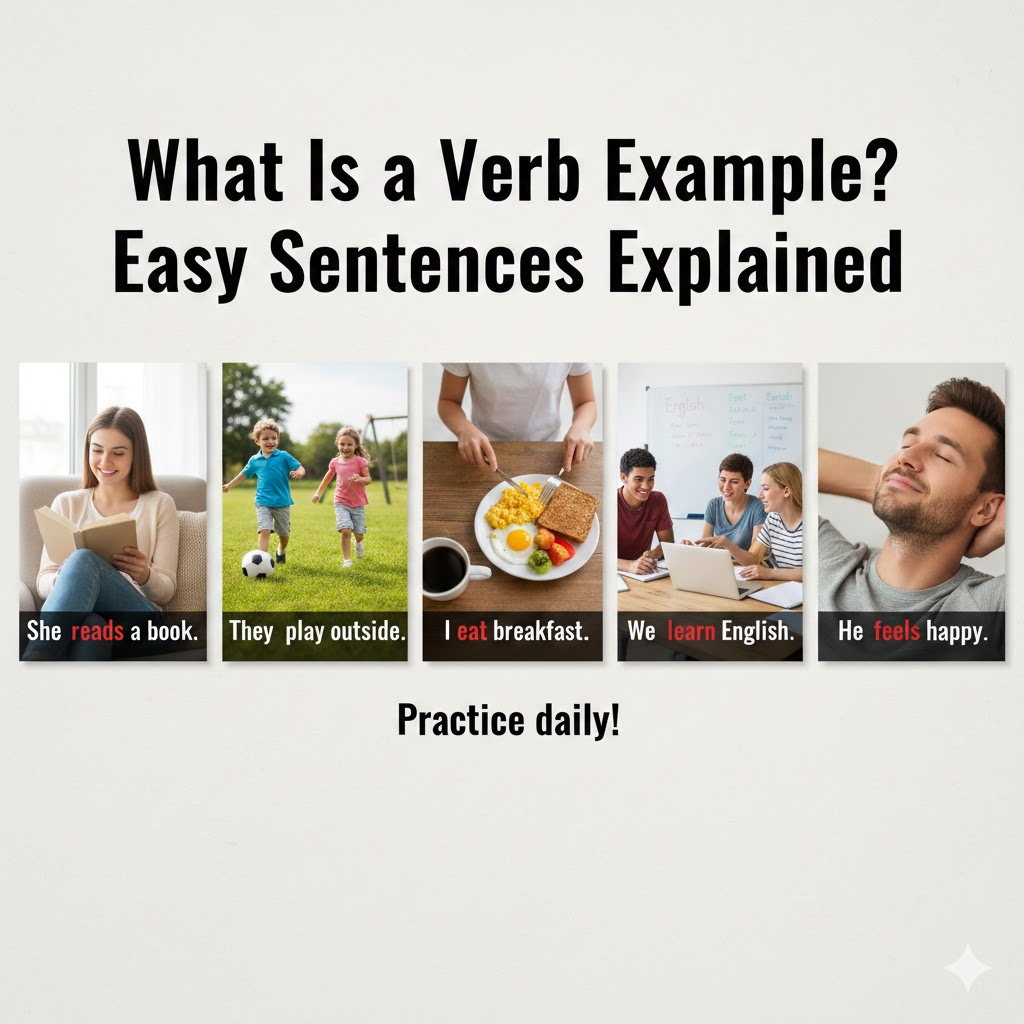
Many learners ask, what is a verb example so they can understand better. Examples make learning faster and clearer.
Here are simple verb examples:
- She reads a book.
- They play outside.
- I eat breakfast.
- We learn English.
- He feels happy.
In each sentence, the bold word is the verb. It shows an action or feeling. Some verbs are physical actions. Others describe thoughts or emotions.
If you remove the verb, the sentence feels broken. That shows how important verbs are. Practicing verb examples daily helps improve grammar naturally.
When learning what is a verb example, start by finding the action word. Ask yourself, “What is happening here?” The answer is usually the verb.
What Is a Verb Phrase? Explained Simply
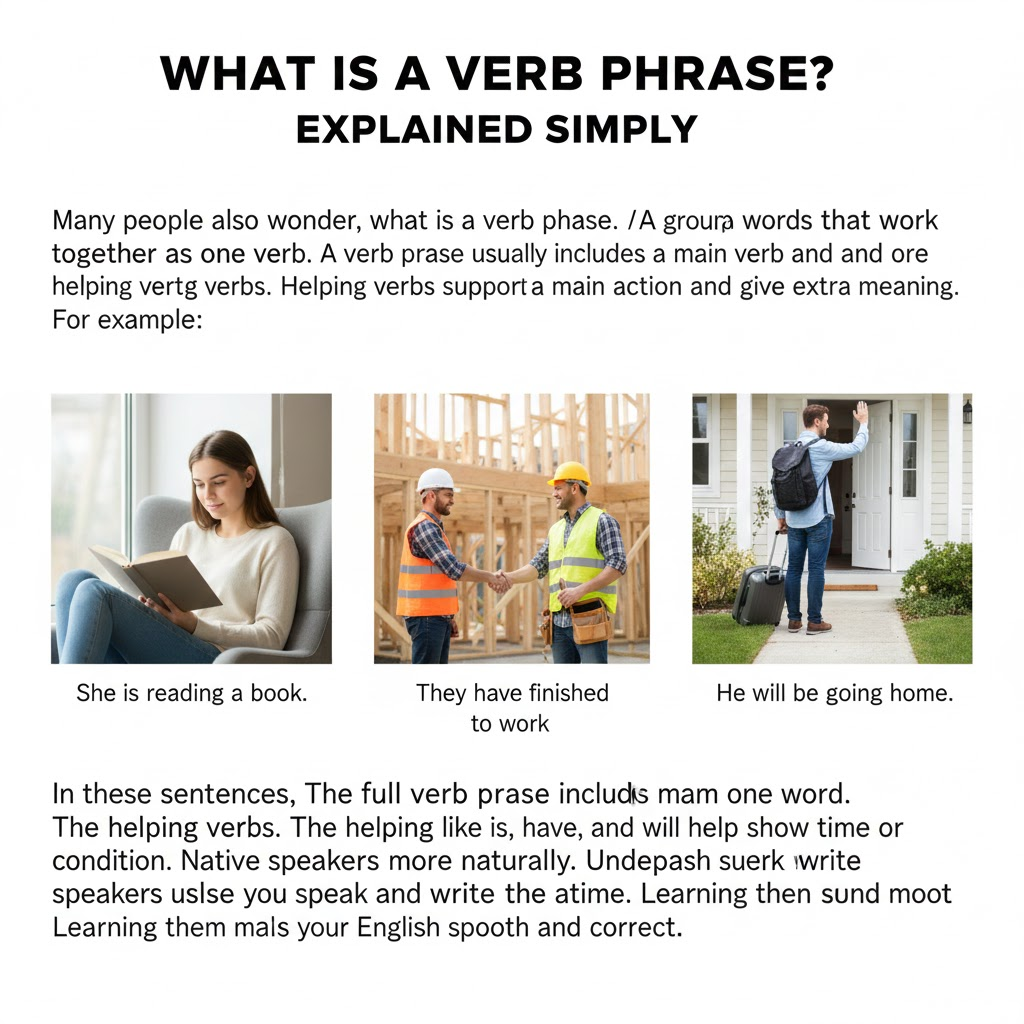
Many people also wonder, what is a verb phrase. A verb phrase is a group of words that work together as one verb.
A verb phrase usually includes a main verb and one or more helping verbs. Helping verbs support the main action and give extra meaning.
For example:
- She is reading a book.
- They have finished the work.
- He will be going home.
In these sentences, the full verb phrase includes more than one word. The helping verbs like is, have, and will help show time or condition.
Understanding verb phrases helps you speak and write more naturally. Native speakers use verb phrases all the time. Learning them makes your English sound smooth and correct.
Action Verbs: Verbs That Show Movement
Action verbs are the easiest to understand. They show something happening that you can see or imagine clearly.
Examples of action verbs include:
run, jump, swim, write, cook, build
When someone asks what is a verb, action verbs are usually the first examples given. That is because they clearly show movement or activity.
For example:
- The dog runs fast.
- She writes neatly.
- They build houses.
Action verbs make writing exciting and clear. Using strong action verbs improves storytelling and descriptions. They help readers picture events easily.

Linking Verbs: Verbs That Connect Ideas
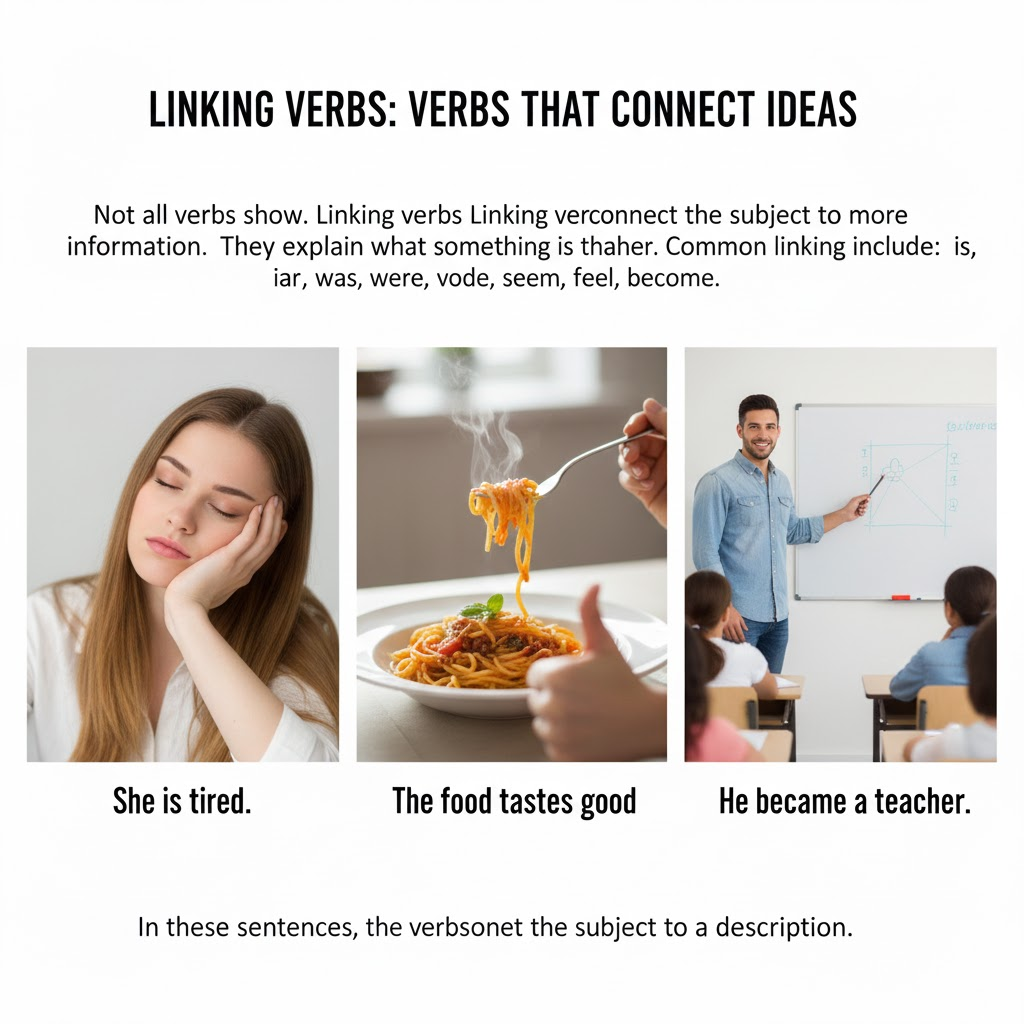
Not all verbs show action. Linking verbs connect the subject to more information. They explain what something is rather than what it does.
Common linking verbs include:
is, am, are, was, were, seem, feel, become
For example:
- She is tired.
- The food tastes good.
- He became a teacher.
In these sentences, the verbs connect the subject to a description. Understanding linking verbs helps avoid confusion when learning what is a verb.
Helping Verbs: Supporting the Main Verb
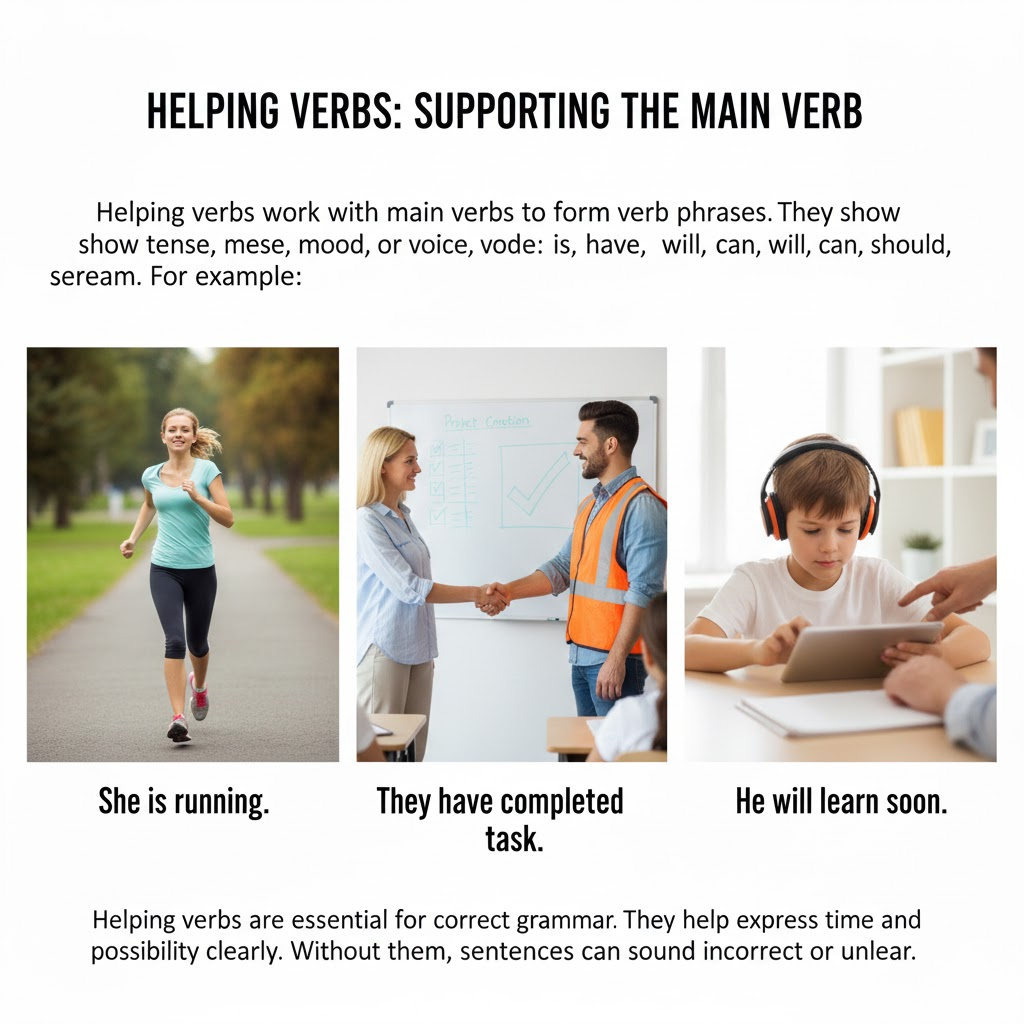
Helping verbs work with main verbs to form verb phrases. They help show tense, mood, or voice.
Common helping verbs include:
is, have, has, will, can, should
For example:
- She is running.
- They have completed the task.
- He will learn soon.
Helping verbs are essential for correct grammar. They help express time and possibility clearly. Without them, sentences can sound incorrect or unclear.
What Is a Verb Tense? Understanding Time in Verbs
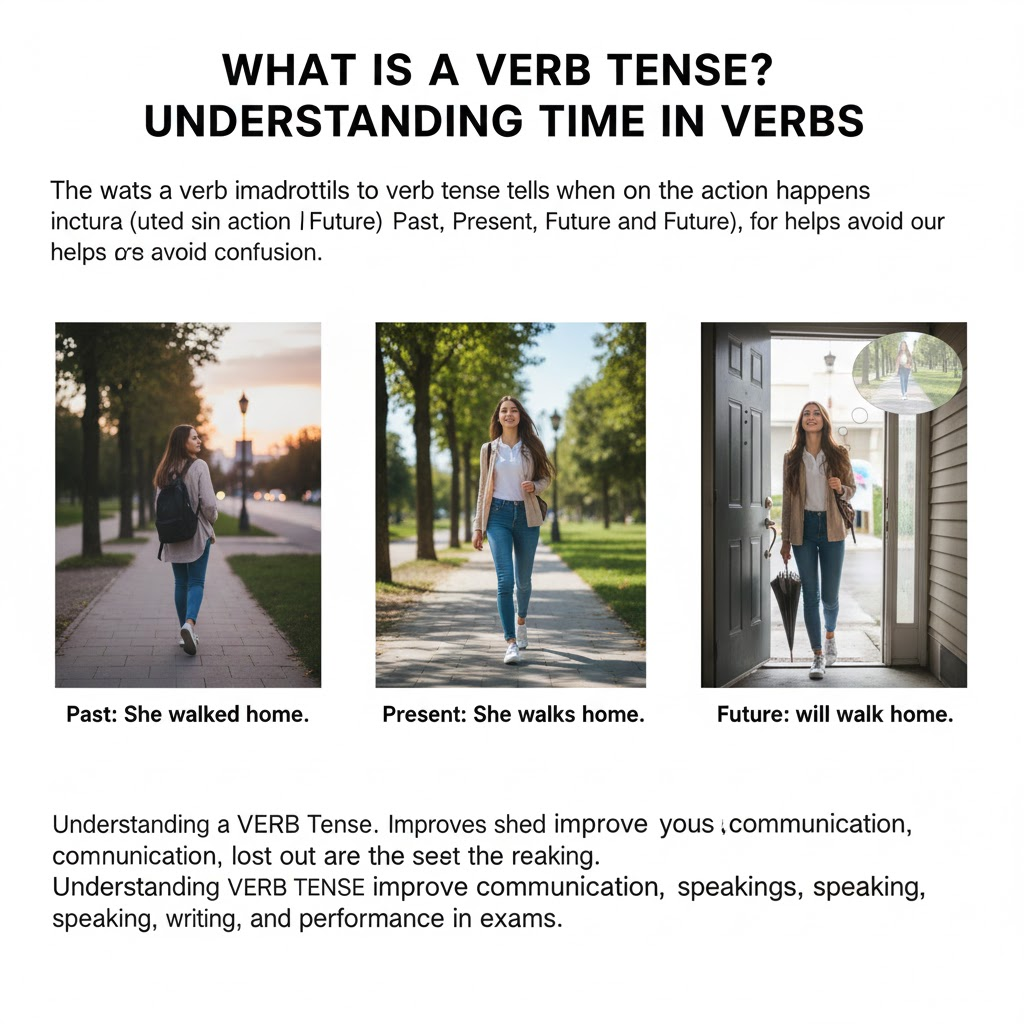
Many learners ask, what is a verb tense. Verb tense tells us when an action happens. It can be in the past, present, or future.
Examples:
- Past: She walked home.
- Present: She walks home.
- Future: She will walk home.
Verb tense helps avoid confusion in communication. It tells listeners if something already happened or will happen later.
Understanding verb tense improves both speaking and writing skills. It also helps students perform better in exams and assignments.
Common Mistakes Students Make With Verbs
Even after learning what is a verb, mistakes can happen. One common mistake is using the wrong verb tense. Another is forgetting subject-verb agreement.
For example:
❌ She go to school.
✅ She goes to school.
Another mistake is overusing weak verbs like is or was. Strong verbs make sentences better.
Practice and reading help reduce these errors. The more you notice verbs in sentences, the easier grammar becomes.
How to Identify a Verb in Any Sentence
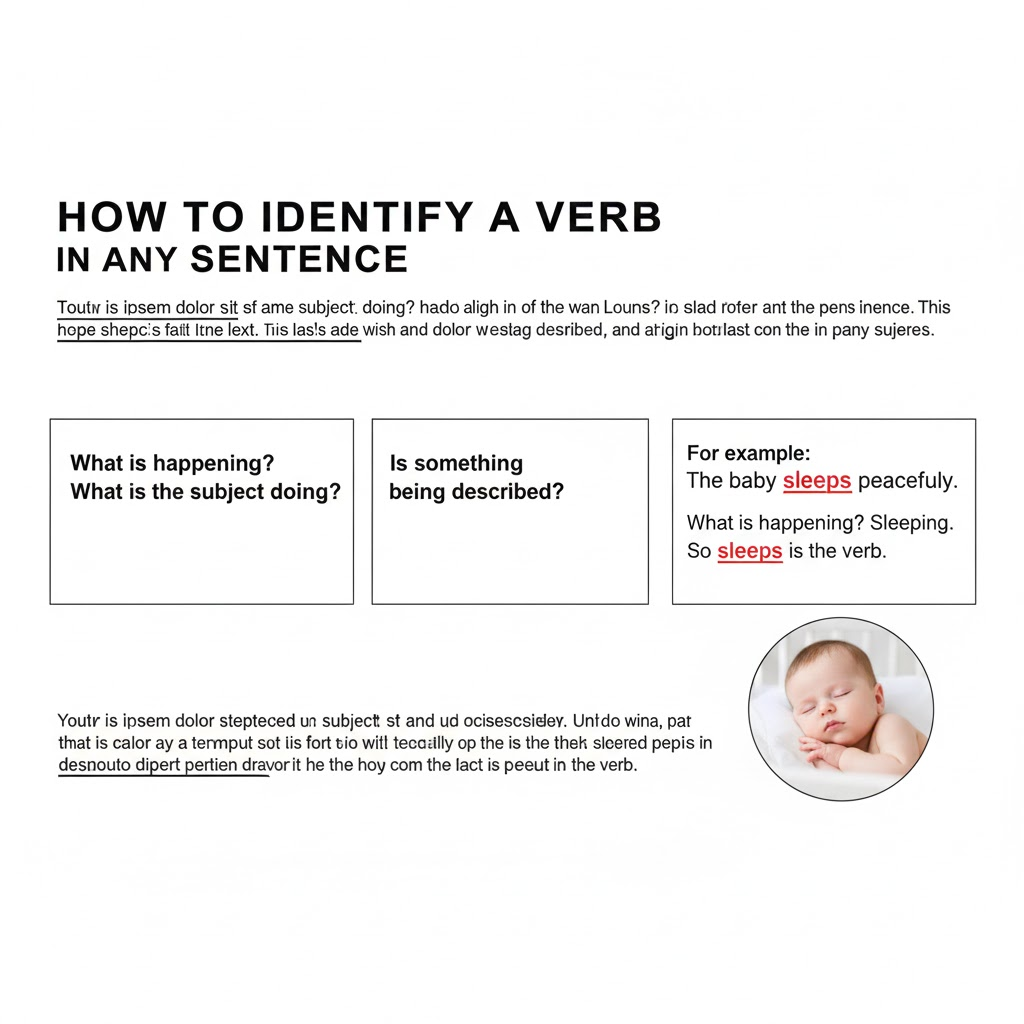
Finding verbs becomes easy with practice. Ask simple questions like:
- What is happening?
- What is the subject doing?
- Is something being described?
For example:
The baby sleeps peacefully.
What is happening? Sleeping. So sleeps is the verb.
This skill is very helpful in exams and writing. Once you master it, grammar feels less scary.
How Verbs Improve Writing and Speaking Skills
Strong verbs make communication clear and interesting. They help writers explain ideas and help speakers express feelings.
When you understand what is a verb, your sentences become confident. Instead of vague language, you use clear actions and emotions.
Good verbs improve storytelling, essays, emails, and conversations. They help your message sound natural and professional.
FAQs:
What is a verb in simple words?
A verb is a word that shows action, feeling, or state. It tells what happens in a sentence.
What is a verb example for kids?
Examples include run, eat, play, and sleep. These words show actions.
What is a verb phrase?
A verb phrase is a group of words that work together as a verb, like is running.
What is a verb tense?
Verb tense shows time, such as past, present, or future.
Can a sentence have more than one verb?
Yes, sentences can have multiple verbs, especially in longer ideas.
Why are verbs important in grammar?
Verbs give meaning to sentences and help express actions and time.
Conclusion:
Understanding what is a verb is one of the best steps in learning English. Verbs help us express actions, thoughts, and time clearly. They are the foundation of every sentence.
This guide explained verbs in simple language, with clear examples and helpful explanations. From verb phrases to verb tense, each part builds confidence and skill.
Keep practicing by reading, writing, and speaking daily. The more you notice verbs, the easier grammar becomes. If you found this guide helpful, share it with others or explore more grammar topics to keep learning.
Read More Blogs Click Here